



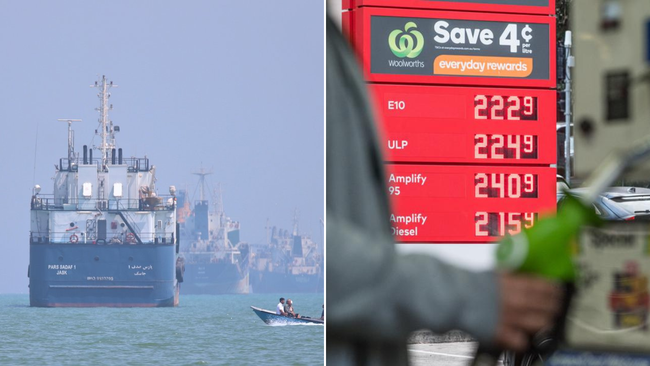

After five months of elevated fuel prices amid the Iran conflict, more than one in three Australians has permanently changed the way they live.
Many people are swapping the car for public transport, changing jobs or even moving house, new research has found. The survey, commissioned by lender Credit24 and conducted by Primara Research, found 37 per cent of respondents had adopted lifestyle changes they do not expect to reverse as households continue to grapple with higher petrol and diesel costs.
The conflict in the Middle East drove up global oil prices as traders feared disruptions to supplies through the Strait of Hormuz.
Know the news with the 7NEWS app: Download today
For Sydney tech worker Alan, 34, who asked that only his first name be used, the fuel price shock changed far more than his weekly budget.
After negotiating with his employer to work from home four days a week during the height of the fuel crisis, he later traded his petrol-powered Suzuki Jimny for a second-hand electric Tesla Model 3, slashing his transport costs.
“I can just charge it at home,” he said. “I’ve got a really competitive plan … it’s basically $12 a month to charge my car.”


Alan estimates the switch saves his household about $150 to $300 a month and says he has no intention of going back.
“I think it goes a long way for us because it just means it goes to other stuff, paying other bills,” he said.
“Some things we just don’t have any control over … so moving to an EV was the obvious choice. I don’t look back.”
The research comes as Australia enters a fifth month of higher fuel prices, with petrol still about 5 per cent above pre-crisis levels and diesel about 8 per cent higher.
The remaining 16-cent-a-litre fuel excise cut is also due to end this month, adding further pressure at the bowser.
Many said the changes they made had become a permanent part of daily life.
According to the survey, 23.5 per cent of respondents said they were using public transport more often, while 14 per cent were walking or cycling instead of driving.
Another 6.1 per cent had bought or leased an electric vehicle or hybrid, while others had changed jobs, moved house or negotiated more flexible work arrangements.
Millennials were the most likely generation to make a lasting change, with 47.8 per cent saying their new habits were permanent, ahead of Gen Z (40.3 per cent) and Gen X (37.2 per cent).
Just 21.7 per cent of Baby Boomers reported making long-term changes.
“Fuel is the trigger here, but the pattern is bigger than fuel,” Primara Research head of research and data Peter Drennan said.
“Once a cost stops feeling temporary, Australians adjust and stay adjusted. That’s the real signal in this data.”

He said the results highlighted how little financial breathing room many households now had.
“When a cost holds for long enough, budgeting isn’t optional anymore. People are forced to find the money somewhere else in their lives,” Drennan said.
“The generational gap here is really a gap in how much financial buffer people have to begin with.”
The findings were echoed in the comments of a 7NEWS Facebook poll, where readers described buying bikes and hybrid cars, catching buses, walking to work, combining errands into a single trip, carpooling and only using the car when absolutely necessary.
Others said they had taken on extra work to cover higher fuel bills or simply shopped around for the cheapest bowser prices.
Some, particularly in regional areas, said there was simply no alternative to driving.
Alan said the changes extended beyond buying a new car, with his family also carpooling more often and thinking twice about unnecessary trips.
“You’re just trying to not be susceptible to those external changes,” he said.