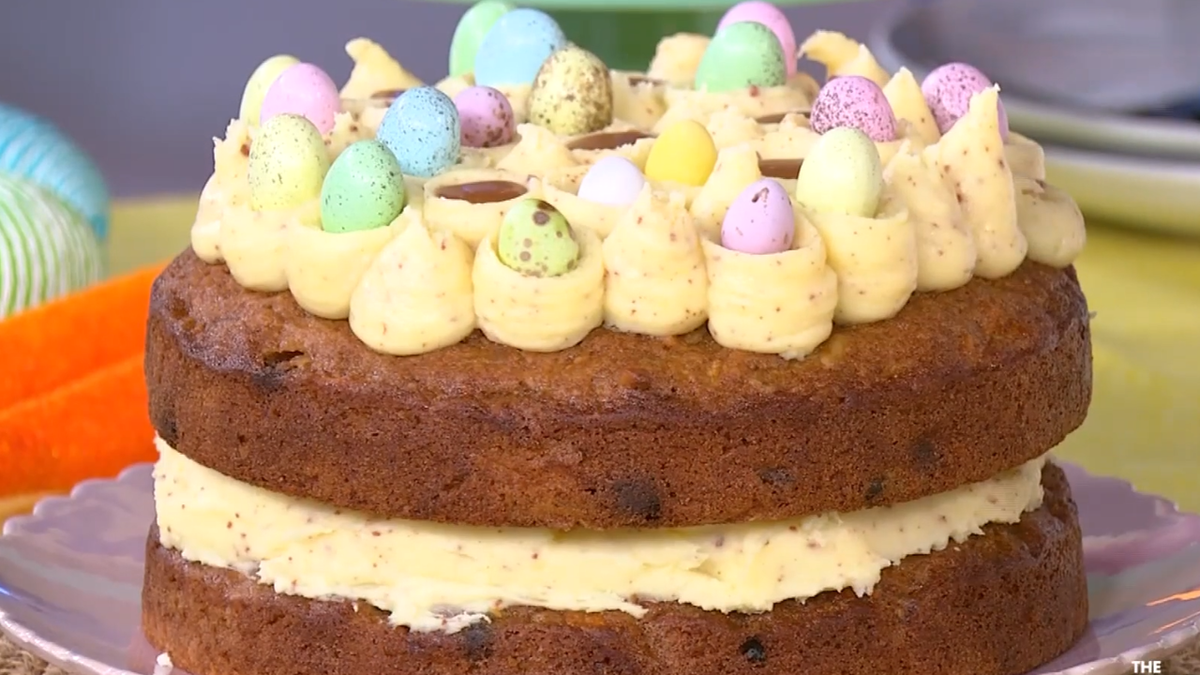

If there’s one dessert guaranteed to impress this Easter, it’s this rich, flavour-packed carrot cake layered with cream cheese frosting and a spiced salted caramel.
On The Morning Show, Bake Off favourite Adam Miller shared his go-to recipe, showing how to create a soft, spiced cake that can be turned into cupcakes, a bundt or a classic layered showstopper, all topped with an indulgent caramel finish.
Ingredients
Know the news with the 7NEWS app: Download today
Easter Carrot Cake
- 100g mixed dried fruit (sultanas, raisins etc) soaked in tea or brandy
- 300g carrots
- 100g pecans, roughly chopped
- 300g plain flour
- 1 ½ teaspoons baking powder
- ¾ teaspoon bicarb soda
- 1 heaped tablespoon of mixed spice
- 1 ½ teaspoons ground cinnamon
- 1 teaspoon fine sea salt
- 260g light brown sugar
- 3 eggs, room temperature
- 300g vegetable oil
- 50g mixed peel (optional)
Cream cheese icing
- 250g unsalted butter – browned or normal, room temperature (if browning your butter, do so while the cake is baking so it has time to cool)
- 200g icing sugar
- 250g cream cheese, full fat, room temperature
- Pinch of sea salt flakes
Easter salted caramel (optional)
- 340g caster sugar
- 130g unsalted butter, room temperature
- 180g thickened cream, room temperature
- 2-3 teaspoons salt
- Zest of 1 orange
- 1 teaspoon mixed spice
- ½ teaspoon ground cinnamon
To decorate as you wish!
- Easter eggs of your choice
- Flake
Method
Easter Carrot Cake
- An hour before you plan to bake the cake prepare the dried fruit. If soaking the fruit in tea, add the tea bag to the bowl containing the fruit and pour over the freshly boiled water. If soaking fruit in brandy, bring the brandy to the boil in a small saucepan and then pour over the fruit. Cover the bowl and leave to soak while you get on with the rest of the cake.
- Preheat the oven to 180 degrees C. Grease and line the base and sides of two 20cm round cake tins with baking paper and set aside.
- Grate the carrots and set aside. Roughly chop the pecans and set aside.
- Place the flour, baking powder, bicarb soda, spices and salt in a large bowl and mix to combine.
- In a separate bowl or large jug, whisk the sugar, eggs and oil together until they are combined.
- Add the sugary egg mixture to the flour and gently mix until combined.
- Drain the soaking fruit and add to the cake mixture, along with the carrots, pecans and mixed peel. Fold until just combined.
- Pour the batter into the prepared tins, smooth the top and bake for 40-50 minutes, or until a cake skewer comes out with only a few moist crumbs when inserted into the centre of the cake.
- Leave the cake to rest in the tin for 5 minutes before turning out onto a cooling rack to cool completely.
Cream cheese icing
- Put the butter (browned or standard), cream cheese, salt and icing sugar in a large bowl and use hand beaters and mix until smooth and fully combined.
Assembly
- Place one of the cooled cakes on a plate or cake stand.
- Spoon half of the cream cheese icing onto the cake. Use a small offset spatula to spread the icing and, if using the salted caramel, create a shallow well in the middle, with walls around the edge of about 1.5 – 2 cm
- Pour the easter salted caramel into the well and spread evenly.
- Place the top layer of the cake on top of the filling. Decorate the top with the remaining icing as you wish. To decorate mine, I put the remaining icing in a piping bag with a 1.5cm round piping nozzle and piped blobs all over the top. I then used a small melon baller – but you could also use a teaspoon – to gently push little craters into the blobs, which I randomly filled with a mix of small hard-shelled easter eggs or salted caramel.
- Serve this cake on the day, or place in the fridge overnight (in a sealed container) to let the flavours develop even more. This cake keeps well in the fridge for up to 5 days.
If decorating cupcakes – use a melon baller or teaspoon to scoop out a divot in the top of the cupcake and fill with some salted caramel. Place the scooped-out cupcake on top of the caramel and then pipe a ring of cream cheese icing to create a nest. Fill the ring with small easter eggs.
If decorating a bundt cake – smother in the cream cheese icing. Use shards from a Flake (or similar) to create a nest around the top of the cake. Fill the centre with a chocolate easter bunny and small easter eggs.
Easter Salted caramel (optional, make the day before)
- To make the caramel, place the caster sugar in a medium saucepan and put it on medium heat. Leave the sugar undisturbed for a minute or two until you see it start to melt around the sides. Use a small spatula or whisk to gently stir the sugar as it melts and begins to caramelise.
- Don’t be alarmed if the sugar clumps a little as it melts. Because there’s no added water, there’s no risk of the sugar crystallising. Just keep gently stirring the caramel, and it will all eventually melt. Keep a close eye on the caramel as the colour can deepen quickly.
- Keep stirring until the caramel reaches a deep golden whisky colour and remove from the heat. Immediately add the softened butter and whisk to combine, being careful of the spluttering! Gradually whisk in the cream until combined and silky smooth.
- Whisk in 1 teaspoon of the salt, the orange zest and spices and taste (careful, it’ll be hot!). If needed, add more salt in small increments until you have the sweet-salty flavour balance you prefer. Pour into a sterilised jar to cool completely and store in the fridge.
- Alternatively, you can buy a jar of salted caramel from the supermarket, pour into a saucepan and heat on low/medium, stirring often. Remove from the heat just before it boils and then stir through the orange zest and spices. Pour back into the jar and chill.
How To Brown Butter
- Dice your butter into rough cubes and put in a medium saucepan. Place on a medium/low heat and stir until the butter melts.
- Stir the butter occasionally as the butter browns – the whole process takes about 10 – 15 minutes. Here are the stages your butter will go through:
- The milk solids will start to separate, and you’ll start seeing white dots bubble and simmer to the surface.
- The butter will then start to boil and foam. Remember to keep stirring every minute or so.
- As the butter continues to brown, the foam will subside and continue to boil. Remember to keep stirring every minute or so.
- After a few minutes, the butter will start to foam up again in a more dramatic way than it did before. Browned, caramelised milk solids will start to emerge on the surface of the foam. This is when you immediately take the butter off the heat and pour into a heat-proof bowl.
- Let the butter cool on the bench for 10-15 minutes and then place into the fridge to cool.
- Stir the butter every 30 minutes to distribute the milk solids and encourage the butter to cool evenly. Alternatively, you can make the brown butter days in advance and leave in the fridge, taking it out a few hours before you want to make the icing, so it has time to come to room temperature.
- To use in the icing for this cake, you want the butter to be cooled and the consistency of a thick buttercream, but not fully solidified.