



Would you eat food made by a random stranger on the internet?
A viral food trend sweeping the US has arrived in Australia, with home cooks using Facebook Marketplace to sell homemade meals directly from their kitchens.
Instead of ordering from restaurants through delivery apps, Sydneysiders are now browsing Facebook Marketplace for dishes, then messaging sellers, and picking up meals from their homes.
Know the news with the 7NEWS app: Download today
From simple desserts to seafood boils, the platform has become more than just a place to sell second-hand items.
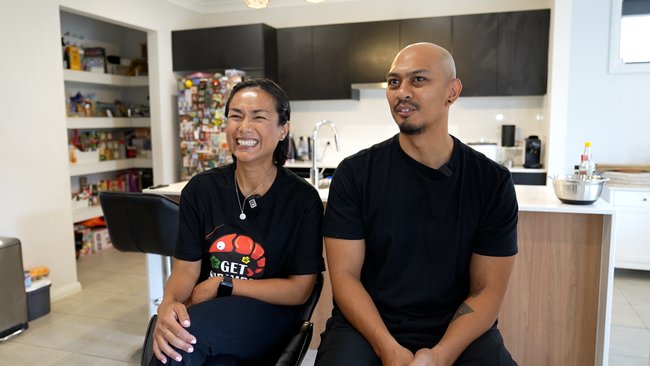
Abigail Reyel-Enriquez, founder of Get Shrimped, a food business specialising in Hawaiian cuisine, recently started using Facebook Marketplace to sell her food for the first time in her 10-year business journey.

“It came from a passion from a travel that we did in Hawaii,” she said.
“We were doing pop-ups in markets. The dream was to eventually make it into a food truck, but that just didn’t transpire yet.”
Abigail said doing doing food stalls and pop-ups took a toll on her and her husband, Stephen’s bodies due to intense time constraints and hours spent setting and cleaning up.
“It’s easier (at home) because we can just prepare everything and cook it straight away and cleaning up as well,” Stephen said.


Building a business on social media
The surge of influencers making videos on the phenomenon gave them confidence to start their Marketplace journey as a way to “spread the word” about their Hawaiian food.
Abigail has also branched out to Instagram to advertise her business on a larger scale, saying people have travelled as far as from Wollongong to pick up their food.

“I think Facebook Marketplace and doing a lot of social media advertising is really getting us out there,” she said.
“It’s a good way to start because you don’t have to worry about wages or paying overheads and rent,” Stephen said.
Another person from Facebook Marketplace, who asked to remain anonymous, said the platform was the “easiest way” to kick-start their food journey in hopes of eventually branching out to physical markets.
“If it wasn’t for Marketplace, then it would require far more effort and work to be able to go out, put yourself into a market, or be able to set up a pop-up somewhere,” they said.
“This was just a safe and simple, low-barrier way to get out and see if there was a genuine response, not just within your own circles.”

“It’s given me a lot of testing, learnings and insights, which I probably wouldn’t be able to do unless I kind of go all in with it, which I wasn’t ready to do.
“But this has given me more the validation and confidence to say, yeah, I can explore this, and this is something that I can potentially go all in on one day.”
For Abigail and Stephen, balancing their regular work with food orders has proven manageable, saying the trickiest impact is their kids’ pick-ups and drop-offs at school.
“I got to make sure I don’t have orders between a certain time so that I can do the pickup from school.”
They said customers will often adhere to a schedule, saying people will “make time” for whenever they’re free.
Risks and rules
While some buyers might be hesitant to purchase food from a stranger’s home, the concern goes both ways.
Abigail said she was initially scared of giving out her address when she first started.
“There’s always going to be that risk,” she said.
“I do pay ID. If they don’t pay, I don’t give the address.
“I’m hoping that there’s still a lot of good people out there, which there are. For the most part, there are.”

However, starting a food business from home isn’t as simple as it might seem.
In New South Wales, home-based food sellers must meet the same food safety requirements as other retail food businesses.
Sellers must notify their local council of their business and food activity details, appoint a food safety supervisor, and meet the requirements of the Food Standards Code, which covers safety, composition, labelling and handling of food sold in Australia and New Zealand.
Having started Get Shrimped 10 years ago, Abigail and Stephen have had to ensure they’ve taking the correct steps to sell food at home.
This includes temperature checks, sanitation and overall cleanliness.
“We’re dealing with high-risk food. We’ve got to make sure that we’re cooking at the right temperatures, even storing it, prepping it,” Stephen said.
Abigail said having a food safety certificate and food safety supervisor “is a must” for food businesses, however, are often overlooked and “nuanced” for home-based kitchens.
They said some people starting on Marketplace don’t always realise there are rules and regulations to follow as it’s treated as a trend or harmless side hustle.
“They’re like, this is trendy right now. Let me start a food business and put it on Facebook Marketplace but they don’t realise like how much more goes into it,” she said.
“That’s where that grey line comes in.
“A lot of people just can come in and be like, ‘yeah, I sell pork in my backyard’. And no one checks it because no one has to.”
They emphasised the importance of treating Marketplace food sales as a proper business from the start.
“I think if anyone’s starting a Facebook Marketplace, they need to be looking at that and treating it like, am I treating this as a business or am I just on a weekend cookout kind of thing,” Stephen said.

As for whether this trend represents the future of the hospitality industry, Abigail believes it’s here to stay but won’t completely replace traditional restaurants.
“It’s a good way to build that awareness and build your brand, but I wouldn’t say it’s completely replacing like the hospitality industry.
“It’s evolving for sure, but it’s going to be like a hybrid of doing food from home and then doing it in a brick-and-mortar store.”
“I think Facebook Marketplace is here to stay, and these kinds of businesses are here to stay, and people are just going to be more receptive to it. People are going to adapt.”