



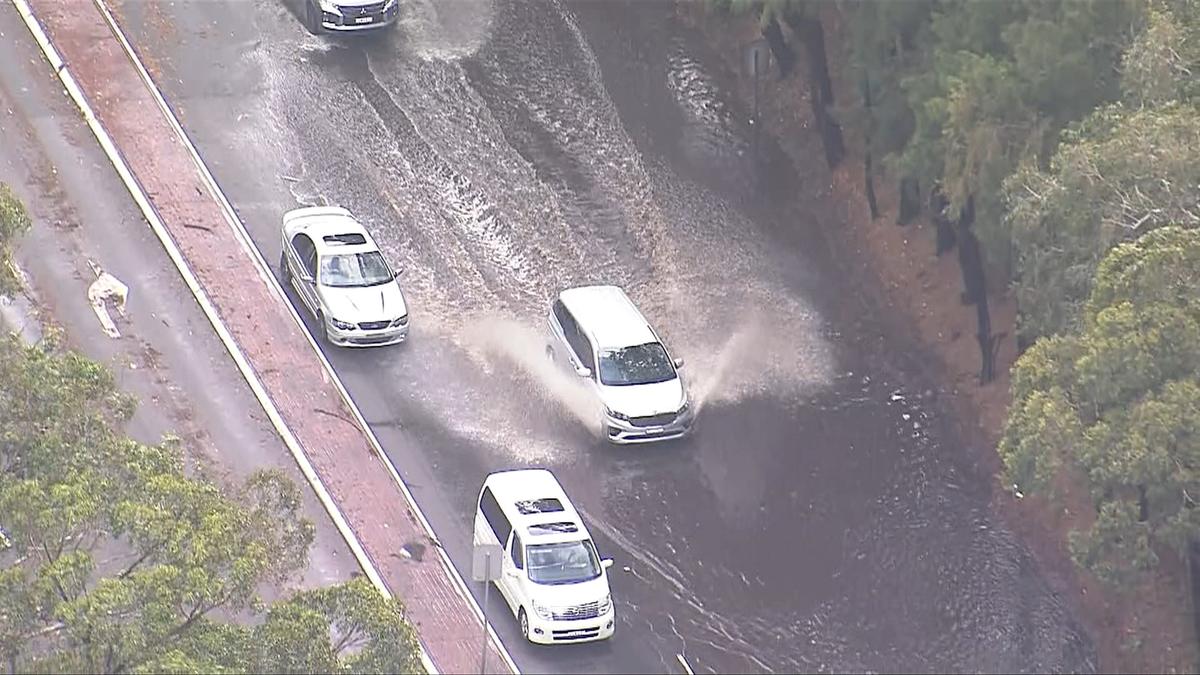


A Sydney lawyer has revealed how Aussie police are cracking down on dirty cars.
He said some drivers use dirt to dodge detection with licence plates grimy enough to be illegible from a distance, while other motorists are getting stung for unintentionally dirty plates.
The crime falls under the offence of having an obscured number plate, fines for which vary across the nation.
Know the news with the 7NEWS app: Download today
While the initial fine ranges from just $100 in Western Australia to $649 in South Australia, the cost of disputing the claim can balloon in court.
Electing such a matter to court in Queensland can land drivers with a maximum penalty of $6452.
“There are widespread examples of people adding dirt to their number plates to obscure them and avoid detection by cameras, tolls and police,” Astor Legal principal lawyer Avinash Singh said.
“Because of this, police are quick to charge people with obscuring number plates, even if they may have an innocent explanation.”
As rainfall increases and roads get muddier throughout the winter months, Singh said he will likely see these matters more regularly.
“As criminal defence lawyers, we see people contesting fines for dirty licences fairly regularly, particularly when it is due to factors outside of the driver’s control, such as weather,” he said.
“There are significantly more fines issued for obscure number plates in winter than in summer. The reason for this is that when it is raining, vehicles will often be splashed with mud which can lead to the number plates being obscured.”
The cost state-by-state
In New South Wales, number plates have to be visible from up to 20m away. A plate that is obscured, defaced or otherwise illegible in the state can land offending drivers with a $464 fine and three demerit points. If taken to court that cost can skyrocket to $2200.
In Victoria, the same rule applies, requiring legibility from 20m, but the initial infringement is $110 and three demerit points. The maximum penalty is $2035.
The same 20m visibility rule also applies in Queensland, where an on-the-spot fine of $341 can increase to $6452 if the matter is elected to court.
In South Australia, plates only have to be visible from 18m away. The fine in the southern state, if plates are not clean, visible and legible is $550 plus a $99 Victims of Crime Levy, bringing the fine to a total of $649.
In Western Australia, the visibility distance is not specified in the state legislation, but rules say the plate must be visible in full at all times. The maximum penalty for a first offence is $100.
When grime becomes a crime
Not every muddy car on the road is considered an offending vehicle.
“If your car is merely dirty but not in a state where it poses a risk to the safety of yourself or other road users, then you cannot be charged with any offence,” Singh said.
There are also ways around the fine, with sufficient proof, he said.
“Authorities may often withdraw fines for obscured number plates if it can be shown that the issue was caused by factors outside the driver’s control,” Singh said.
“Supporting evidence such as Bureau of Meteorology data for the relevant time, along with dashcam footage of severe weather conditions, can also strengthen a case.
“Despite the maximum fine being so high, it is very rare that the court will impose a fine near the maximum.
“Drivers are also far more likely to be successful if they have a good traffic record and can show they are usually a safe driver. “
Plate covers come with their own rules
There are a couple of things that drivers can do to avoid the expensive mistake.
Singh recommended drivers use a number plate cover to assist with keeping their plates visible.
“They can also stop at service stations to check the visibility of their plates and clean them if required,” he said.
But drivers should note there are rules for plate covers too.
In NSW legislation, for example, the plate cover must be “clear, clean, untinted and flat over its entire surface”.
The cover can have neither a reflective surface, nor can it prevent the successful operation of traffic offence detection cameras.